
A car accident can leave you feeling shaken, confused, and unsure about what to do next. After a car accident, medical appointments, vehicle repairs, insurance paperwork, and missed work can quickly become overwhelming.
In this whirlwind, it is easy to think that skipping one physical therapy session or delaying a follow-up appointment isn’t a significant issue—especially if symptoms seem to be minor. Many accident victims do this because of other responsibilities.
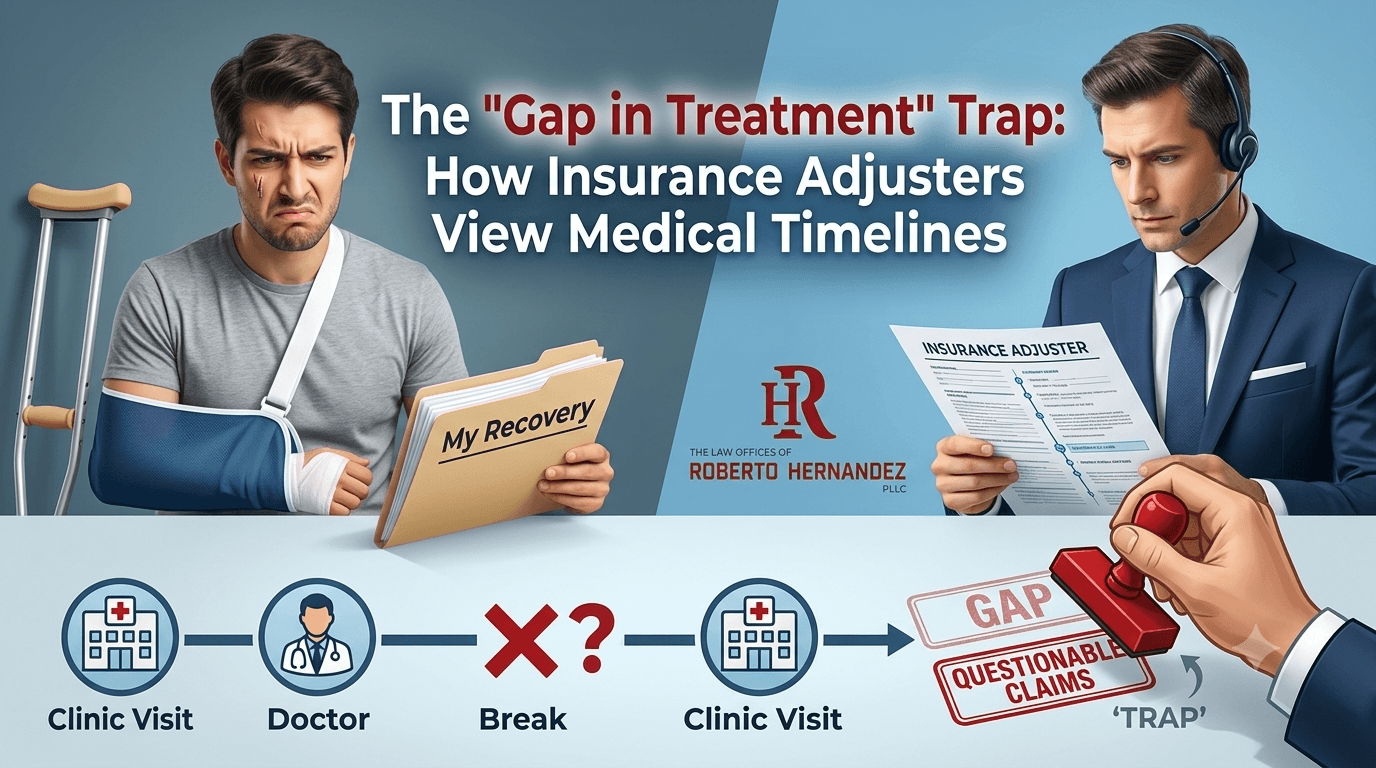
However, within the insurance industry, this is often documented as a “gap in treatment.” It is a common metric used by insurance adjusters to evaluate the validity and value of a claim. Understanding an insurance carrier’s perspective is vital to handling the recovery process effectively.
In this article, we’ll explain how insurance adjusters see medical timelines and how they affect personal injury claims. Read on to learn more.
A gap in treatment refers to any period during which an injured person delays medical care or stops following the treatment plan recommended by their healthcare provider.
In a professional context, adjusters typically look for two specific types of gaps:
The Initial Gap: This occurs when a person waits several days or weeks after an incident before seeking an initial medical evaluation.
The Intermittent Gap: This happens when a person begins treatment but then has a multi-week or month-long lapse between follow-up appointments.
A gap doesn’t mean you aren’t hurt or that your claim is not legitimate. Delay can be because of issues like money, tight schedules, or delayed pain. Still, insurance companies will examine these gaps to try to downplay your injuries and lower your settlement value.
This table shows exactly what is meant by “delayed symptoms” and “gap in treatment.”
Delayed Symptoms | Gap in Treatment |
Pain or symptoms show up hours or days after the crash. | You stop going to the doctor after care has already started. |
Typical for whiplash, soft tissue damage, and concussions. | Looks like missed physical therapy sessions or skipped follow-ups. |
Totally normal; you just go to the doctor as soon as you feel it. | Insurance companies will question why you ignored medical advice. |
Your records will show exactly when the pain started. | Your records need to show why you stopped going. |
Doesn’t hurt your claim if you get checked out quickly. | Can hurt your settlement if you don’t have a good reason. |
Understanding this distinction helps explain why insurance adjusters closely examine medical timelines during the claims process.
Insurance adjusters are tasked with verifying that a claim is directly related to a specific incident. When they see a hole in a medical timeline, they may draw several conclusions that can impact the outcome of a case:
The most common argument used by adjusters is that a lack of immediate or consistent care suggests the injury was not severe. If there is a delay in reporting the initial pain, the insurance company may argue that the injury occurred during a separate, unrelated event that occurred after the accident.
To settle a claim, the insurance company must be able to link the injury directly to the accident. A significant gap in treatment makes it difficult for medical providers to state with certainty that the current symptoms are not the result of a “new” injury that happened during the period when a doctor was not seeing the patient.
Injured individuals generally have a legal duty to take reasonable steps to support their recovery.
If a treatment plan is prescribed but not followed, the adjuster may conclude that the claimant failed to mitigate their damages. They might argue that the recovery period was unnecessarily extended because the patient did not adhere to the recommended therapy or medical advice.
Insurance companies focus on medical treatment gaps to evaluate the value of your personal injury claim.
Utah insurance law allows you to file a bodily injury case within 4 years and a property damage case within 3 years.
If there is something unclear, adjusters get a chance to lower your compensation. A consistent medical record can help document:
Injury severity
Medical expenses
Future treatment needs
Recovery timeline
Pain and suffering
When treatment is interrupted, insurance companies may question:
Whether additional treatment was necessary
Whether future medical care is related to the accident
Whether ongoing symptoms are connected to the original injury
A treatment gap does not mean an injury is less serious. However, it can make the injury more difficult to prove and may reduce a claimant’s ability to negotiate fair compensation.
To protect your claim, you need to have different evidence in hand. Here is the list of the most essential evidence:
Doctor’s notes
Appointment records
Referral paperwork
Pharmacy records
MRI reports
PT attendance
Emails
Text reminders
Many injured people experience gaps in care for everyday reasons, such as:
Work obligations
Financial limitations
Transportation issues
Referral delays
Appointment availability
These reasons are common and understandable. However, they should be documented. Without an explanation, insurance adjusters may interpret a gap as evidence that the injury was not severe.
For some patients, options such as medical lien arrangements may help them continue receiving necessary treatment while their claim is pending.
A treatment gap does not automatically prevent you from recovering compensation. However, taking prompt action is important.
Here is how you handle it:
Get back to the doctor immediately. Call and schedule an appointment right away to resume your care.
Be honest about the gap. Tell your doctor exactly why you missed appointments—whether it was money stress, work schedules, transit issues, or waiting on a referral.
Get it in writing. Ask your doctor to note that reason directly into your medical chart.
Stick to the plan. Show up to all your future appointments and follow their advice consistently.
Keep your receipts. Save any proof of why you couldn’t make it (like work schedules, late referral letters, or repair bills).
Talk to a lawyer. If the insurance company starts using the gap to lowball you, it’s time to get a personal injury attorney in your corner.
Insurance adjusters love using gaps in care to argue that you aren’t actually hurt. Going back to treatment and documenting the “why” protects both your health and your claim.
To make sure that your medical records remain strong proof of liability, personal injury lawyers suggest following a consistent medical routine. This includes:
Timely Evaluation: Getting prompt medical assistance after an accident establishes a baseline for your health.
Consistent Communication: Provide your doctor with all symptoms for a comprehensive record.
Adherence to Schedules: Attending scheduled appointments helps boost the recovery process.
Following Instructions: Commit to what is told by the medical staff, like physical therapy.
Detailed Record-Keeping: Keep a daily record of your treatment and recovery.
Yes, insurance adjusters use gaps to claim your injuries aren’t severe or weren’t caused by the accident. However, you can protect your claim with a valid explanation and strong medical documentation.
Get back to your doctor immediately and explain exactly why you paused treatment so they can document it. Under Utah law, you have at least $3,000 in PIP (no-fault) coverage on your own auto policy. Use it to get the care you need before the insurance adjuster tries to claim you’re fine.
There is no fixed timeframe, but waiting more than a few days for an initial visit or missing appointments for several weeks will raise red flags. The insurance company focuses heavily on the length and reason for the delay.
Money issues are a valid reason, but you still need to document it. Tell the truth about your financial status to your doctor. Also, you can connect with an attorney who can connect you with providers who wait for settlement payouts.
Yes. An experienced Utah lawyer like Roberto Hernandez can help explain the delay, collect evidence, handle insurance communication, and build a stronger injury claim.
While medical recovery is the priority, understanding the “insurance logic” behind treatment timelines can help prevent common pitfalls. Because every situation is unique, many individuals choose to consult with professionals who understand how insurance companies operate to ensure their rights are protected.
Have a gap in treatment? Hernandez Injury Law helps injured victims across Utah understand insurers’ tactics and build a strong claim.
